

Content Warning: This post discusses death, including the death of animals.
Skipper Update
Remember Skipper, the adorable coyote pup from my last post who showed me, in the cutest way possible, that I can trust my intuition?
I’m going to tell the second half of that story now, but first I have an update.
About a month after seeing the pup skipper-dance across the screen of my trailcam, I realized I was nursing a quiet hope that I would see him live, in person. It was a hopelessly unrealistic hope—coyotes are most active at dawn and dusk, and my wanders through his neck of the woods happen firmly in the late-morning-to-late-afternoon window—but I put out a silent request anyway that I see Skipper or a family member the next time I entered the forest.
At first, nothing happened.
The following week, the piece I wrote about Skipper went out. I rewatched the video of him that morning before leaving for my walk. Once in the woods, my body led me to back to the mudflat, where I checked the trailcam and found no new footage. I was getting ready to go back to the main trail when I heard something on the hillside above me. I turned, and—you guessed it—
Skipper, or a sibling, was trotting along the hillside.
I’m pretty sure you can guess how happy I was. I watched him poke around and eat something for a while until I finally had to leave (I was going to be late to a doctor’s appointment). When I moved, the coyote pup, who’s now more of a teenager, turned to stare at me with perfectly round, yellow-brown eyes. We had a time-stands-still, coyote-to-human, eye-to-eye moment. It was amazing.
(As a side note, I just found out that coyotes can make the “puppy-dog eyes” look that we humans find so compelling in dogs, but that wolves don’t have the facial muscles to make.)
The Other Half of the Story
I’m glad I have this update (and video) so you can remember how high I was flying when I first saw Skipper on my trailcam. Not only was I immediately head-over-heels in love with his playful, bunny-hopping energy, but I’d just confirmed that my gut sense of who had left those mysterious tracks was right (despite almost all evidence pointing to the contrary).
Part of me wishes my story ended here, but it doesn’t, which it turns out is both a good thing and a hard thing.
I mentioned before that I had a lot of doubt about whether my Disney-fied intuitive vision of coyote pups playing in the mud could be real. It turned out it was.
But I now believe my doubt may have been another hit of intuition that I immediately misinterpreted. I thought it was telling me I was wrong. In retrospect, I believe it was actually telling me I was missing something.
It Comes for Us All
Maybe I should have guessed what was missing that day, elated though I was from my discovery. Since last summer, I’ve been coming across startling and strange scenes of death in the woods, like a frog crying out as he was being swallowed alive by a snake (that one had me crying for days).
It got more frequent over the winter, when I saw a Cooper’s hawk drowning a squirrel, a coyote chasing deer beneath watching vultures, and an owl over our deck who felt like a messenger on the evening (I later learned) that my aunt had died.
To be honest, I didn’t love these experiences, unique and educational though they were. Death makes me uncomfortable, and as common as it is in the natural world, I generally try to avoid it and focus instead on the other phenomena around me. Except that it keeps getting shoved in my face in ways I can’t ignore.
But I wasn’t thinking about any of this when the coyote pup skipper-danced across the screen of the camera. Instead, I wanted to know where that pup had danced off to. I saw a trail through the grass and followed it upstream.
Fifty feet away, there were more pup prints. Farther upstream, I found more. At the pond at the head of the stream, I crossed to the other side, turned the corner, and came face-to-face with the head of a deer fawn on the ground directly in my path, a delicate, disembodied hoof nestled next to the throat.
Everything stopped—my body. My breath. My heart.
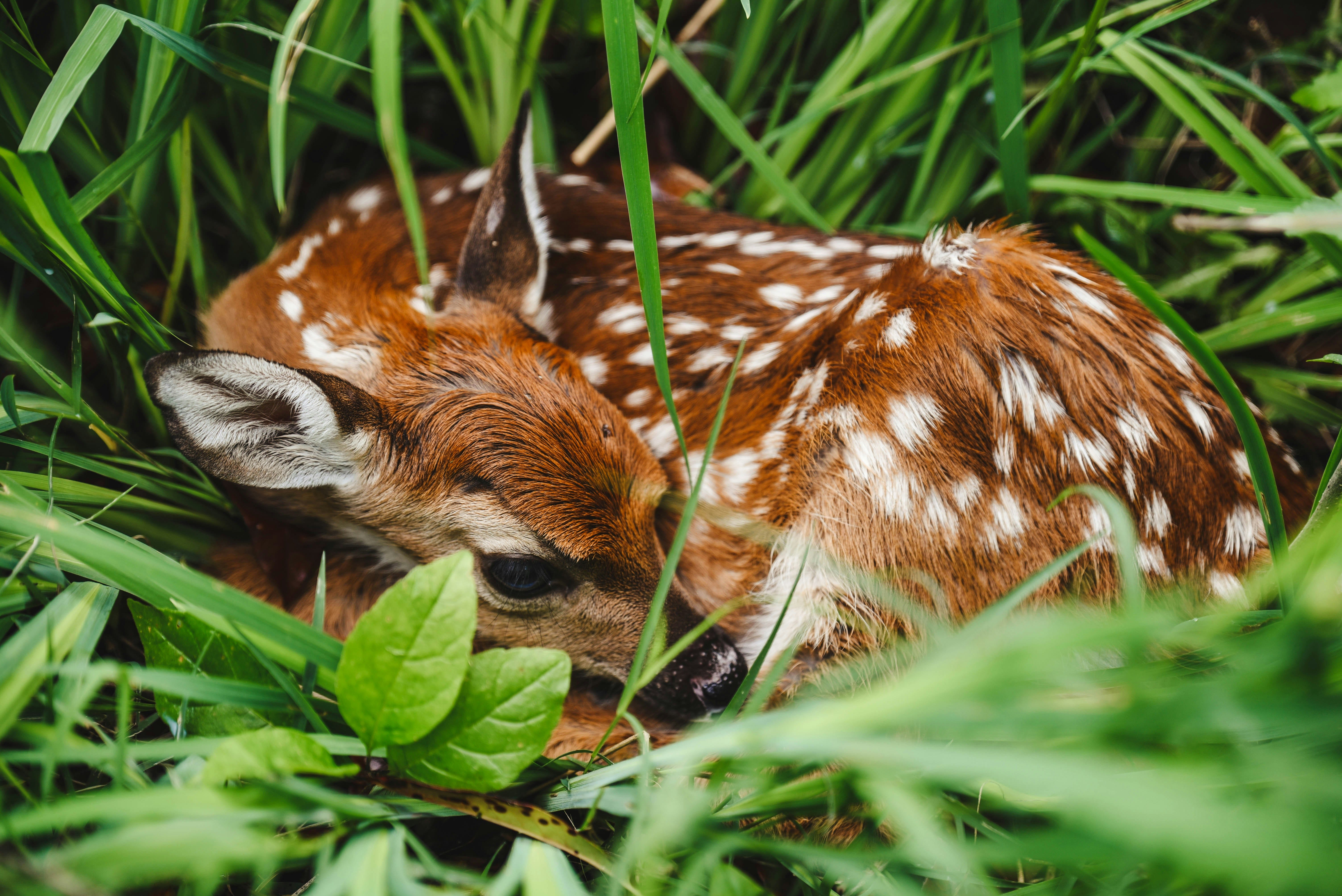
Anybody who knows me at all knows I love animals. If you’ve been with me for some time, you likely know I have a special love for deer. I trust you won’t be shocked to learn that, especially since some special encounters with a particular young one last spring, fawns hold the tenderest spot in my heart. My entire being and body overflows with love for them.
To make matters worse, I’d been looking for a fawn all spring and summer but hadn’t seen any yet. Not until now.
I did the only thing I could do. I cried. I sent gratitude to the fawn for feeding the coyote family. I praised her beauty and sweetness. And I cried a lot more.
Is There a Lesson in Death?
I’ve been reflecting a lot about why I keep running into death. Is it trying to tell me something?
For a long time, I wasn’t sure. I’m still not. It feels like for every idea I put into words, several more slide into obscurity.
But last week, a question arose in my mind with the utter clarity and purpose of a hawk taking off from a branch:
What if death is love?
In other words, what if the thing I’ve been avoiding my entire life is the same thing I’ve been longing for?
There are reasons to believe this could be true.
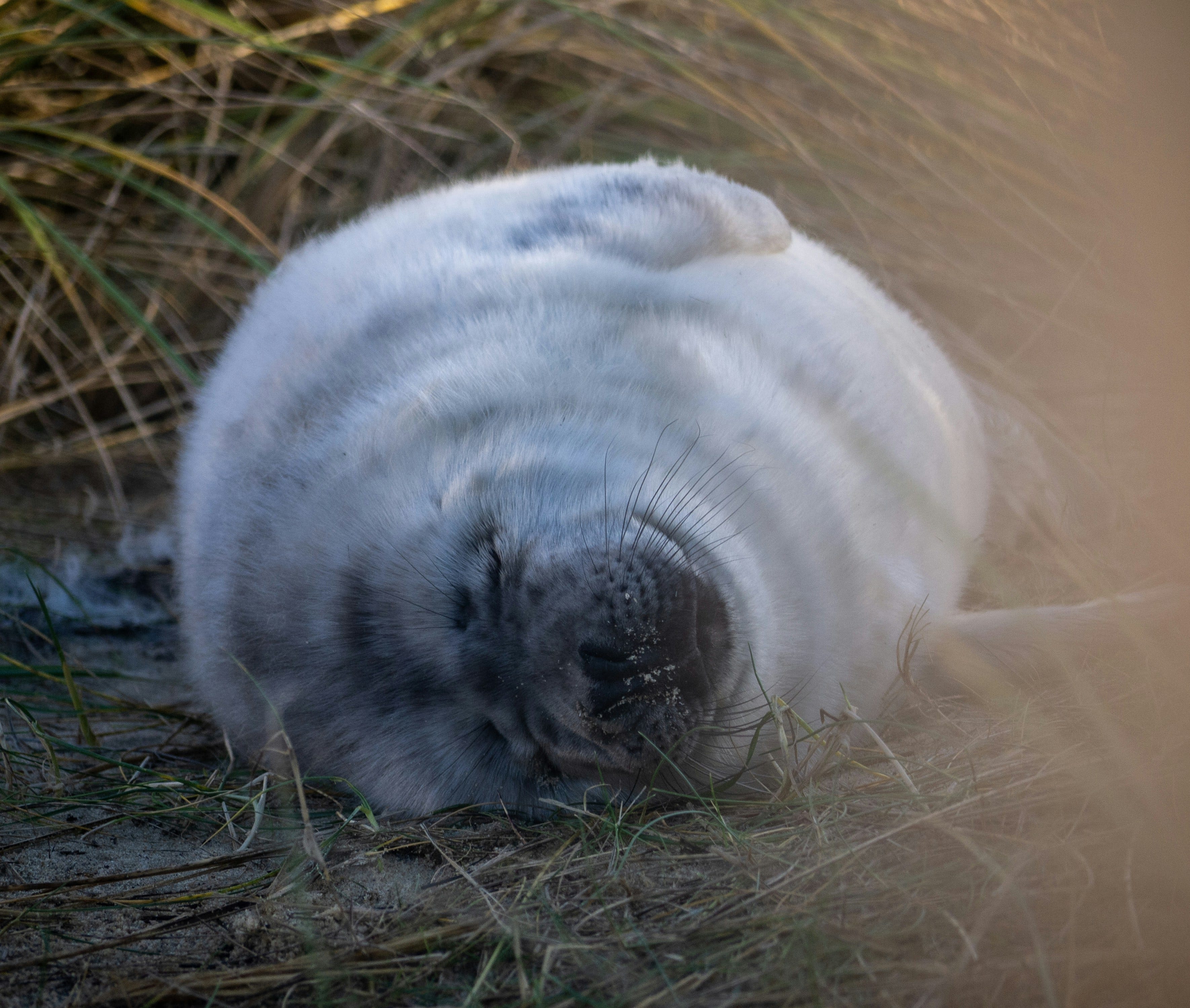
I’ve written before about the dreams I had when I was very young of playing on a glowing beach with a magical white seal. When I was with the seal, I felt so thoroughly loved that it was as if a golden light filled my being and there was no room for anything else—no doubt, no fear, no pain. Nothing could harm me because I was made of light, and I was made of light because I was loved.
I think it was my mother who helped me realize that this recurring dream was likely a memory of my experience before being born. And if that feeling of love and light is where we come from, then I imagine that’s also where we go after we die.
It’s perhaps the most compelling, if ethereal, indication I have that death could really be love.
Heroic Fawns and Heroic Cows (and Pigs and Chickens and Fish)
But it’s not the only evidence.
Let’s look again at the fawn. What if her death was a return to love, and that love extended outward in ripples as gifts to the world, to those she loved and changed and is now a part of—like her mother and deer family—but also to the coyote pups?
This fawn, whether willingly or not, sacrificed her life so others could live. Is that not the definition of heroism?
And she’s not the only one. Billions of cows and pigs and chicken and fish and who knows how many trillions of plants give their lives everyday so human beings can eat. Up and down the food chain, beings are sacrificing themselves so that life on this planet can go on.
Life—inconceivably beautiful, magnificently mysterious, astonishingly fragile—must have death to exist, so death makes life possible. Given this, how can it not be love?
(Another side note—as a mostly-vegan vegetarian, I don’t wish that nobody else ate meat. My food choices cause death too. I do wish everyone would treat the animals and plants who sacrificed their lives for our health and well-being with the reverence that they deserve.)
Becoming What We Love
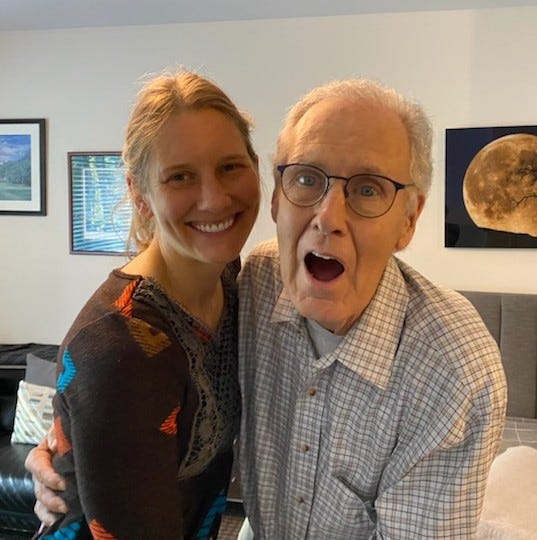
I offer my father’s death as a final consideration (I don’t think he would mind).
My father died a couple years ago from Alzheimer’s and ALS. It sounds horrible, and in some ways it was. But there were a lot of gifts as well, including the fact that my father got closer to love as he got closer to death.
Toward the end, Dad embraced the things he loved with greater and greater abandon, whether he was singing along to music, dancing, or walking in nature.
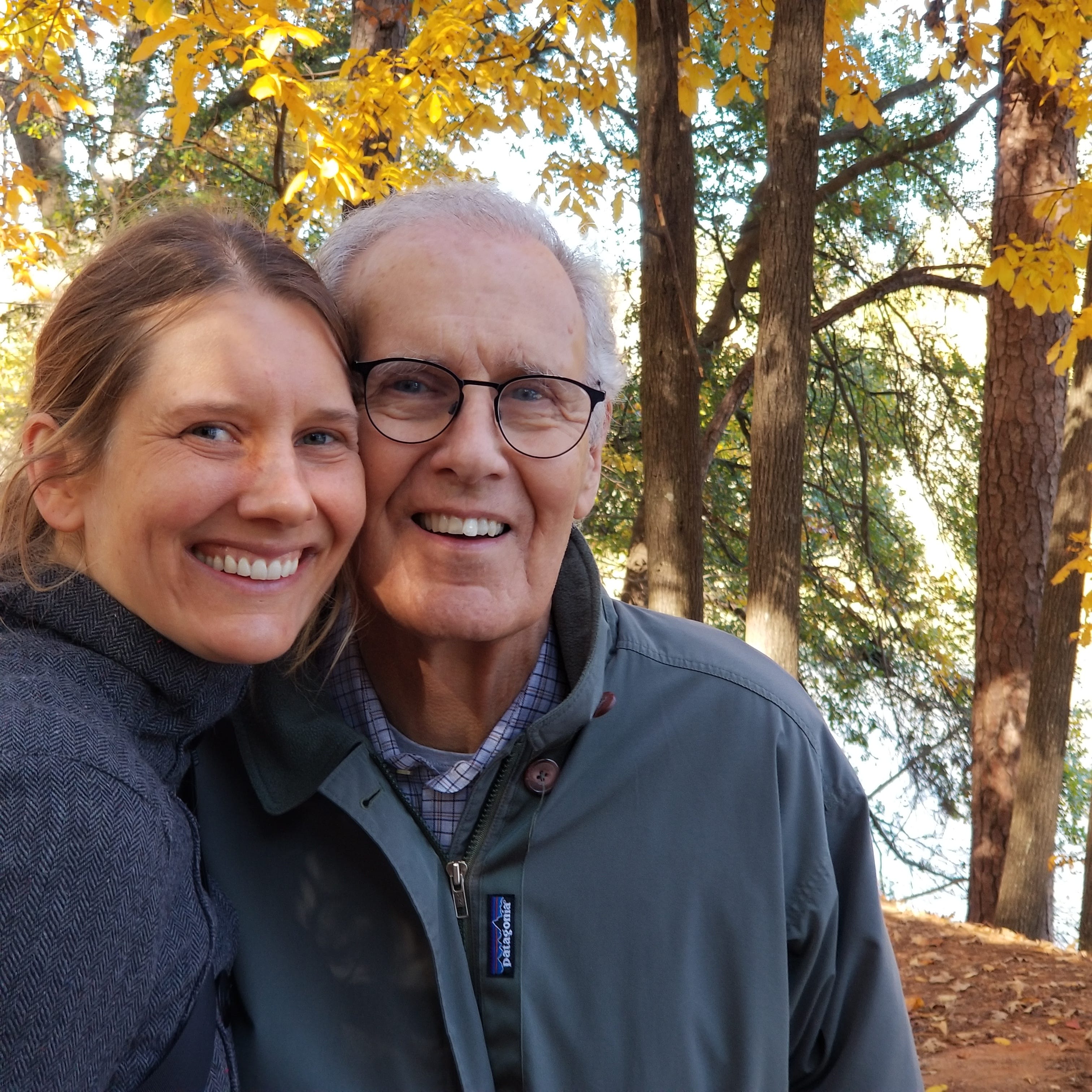
He embraced his family in the same way. In his last few years, he was constantly telling my sister and me how much he loved us, how proud he was, how incredibly grateful. He would often say things like, “I love you very, very, very, very, very, very much.”
When Dad moved from memory care back home with my mother for his final weeks, our lives centered on him. He was the heart of our family during that time—physically, mentally, emotionally, and spiritually. He was no longer cautious with his love but let it all hang out all the time. As a result, he finally found the love he’d always craved.
He became known for demanding kisses from family members and even a caregiver once or twice. I remember one time he was lying in bed and asked me for a kiss. I leaned in and gave him one on his cheek.
“Now four more,” he said, and used his feet to pull me closer.
Like I said, closer to death and closer to love.
A Deadly Misunderstanding
I’m not saying that death doesn’t rip your heart out. It can and it will. It can be brutal to adjust to a world that no longer contains someone or something you love in the form you’re used to. It demands grief.
But I’m beginning to suspect that all my denying, all the fearing, all the avoidance are based on a misunderstanding.
Maybe more than a leaving, death is a transforming—a merging into all the people and beings and places we’ve ever loved.
And if death is a merging into everything we love, how can it be a bad thing?
Perhaps this is the final evidence that death could be love—that it keeps showing up, again and again and again, until we understand that its true nature is the same as our own.
First fawn photo by Noah Smith on Unsplash