
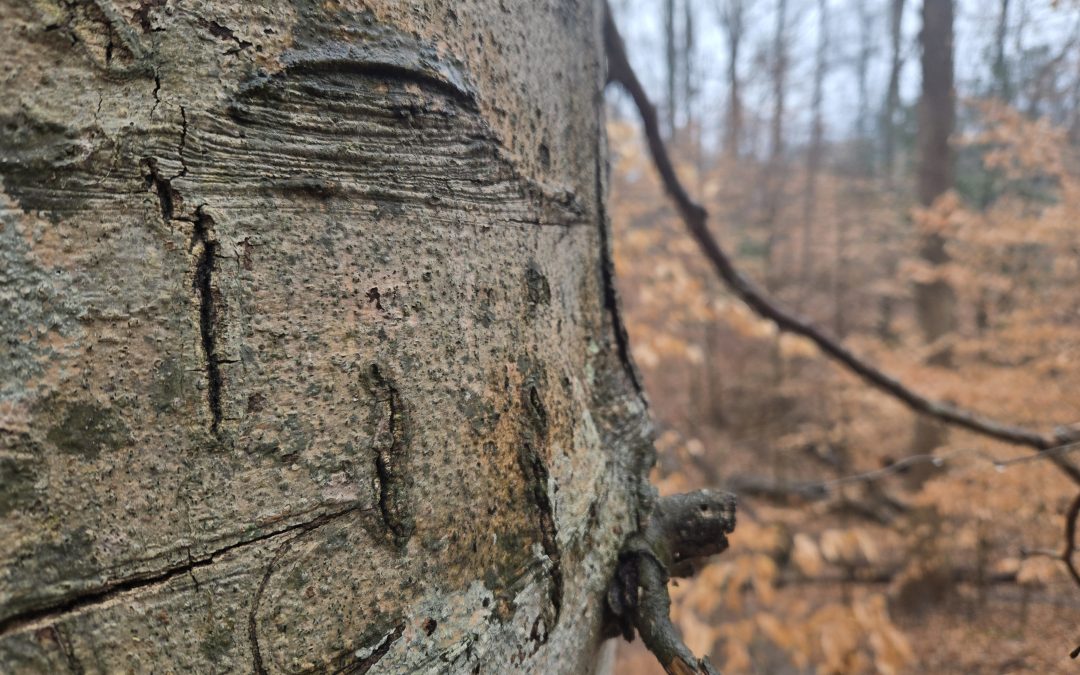
I want to start by acknowledging that there are a lot of horrific things happening on a grand scale in the world right now, so if you’re feeling furious, anxious, depressed, overwhelmed, exhausted, or a little (or a lot) off, you’re not alone.
The Pain
If you’re like me and you tend to take it all in while simultaneously attempting to avoid directly dealing with it, I invite you to pause for a moment with me to touch it intentionally. I’m about to share an antidote, but it really only works when our hearts are open, and it all impacts us (inside and out) whether we’re aware of it or not, so we might as well face it directly so we can respond lovingly and wisely (inside and out).
That said, it doesn’t do any good to overwhelm our nervous systems, or to feel all the pain of it in our own bodies. So if you’re game (and you’re welcome to skip to the next section if you’re not, or if you touch in quite enough as it is, thank you very much), take a moment to let yourself be aware of all the tumult and senselessness, the unnecessary violence and aggression, the deep pain and suffering in the world right now. Envision it as far from yourself or as vague and blurred out as you need to for it not to overwhelm you, and stop whenever you want to. Don’t try to feel it all—in fact, don’t try to feel anything. Just see what arises in you when you bring it into your awareness with as much gentleness as possible.
Let whatever arises in you be there. See if your body wants to move in response, or yell, or cry. Maybe do that. Maybe see if you can soften around it all just a bit. Maybe give whatever’s there some space to breathe.
The Antidote
The more I do this kind of thing, the more it seems to me that the antidote to the horror—what’s at the root of what’s missing in the world and what can help us stay resourced and resilient and ready to respond—is intentionally expanding our relationships based on love and kindness.
That may seem obvious, but I’m not just talking about humans. Yes, those are incredibly important too—deepening ties with those who are impacted, other people who care, still others who care and also happen to disagree, and especially those who help us feel loved and nourished and safe.
But equally important, I’m learning, are our relationships with more-than-humans—with the earth, our ancestors, the land we live on, mountains, oceans, rivers, animals wild and domestic, plants, and—of course—trees.
I have an amazing story to share about an amazing tree I’ve been getting to know over the last several years, but to fully understand the story, first you need to know the tree.
Meet Grandmother Beech
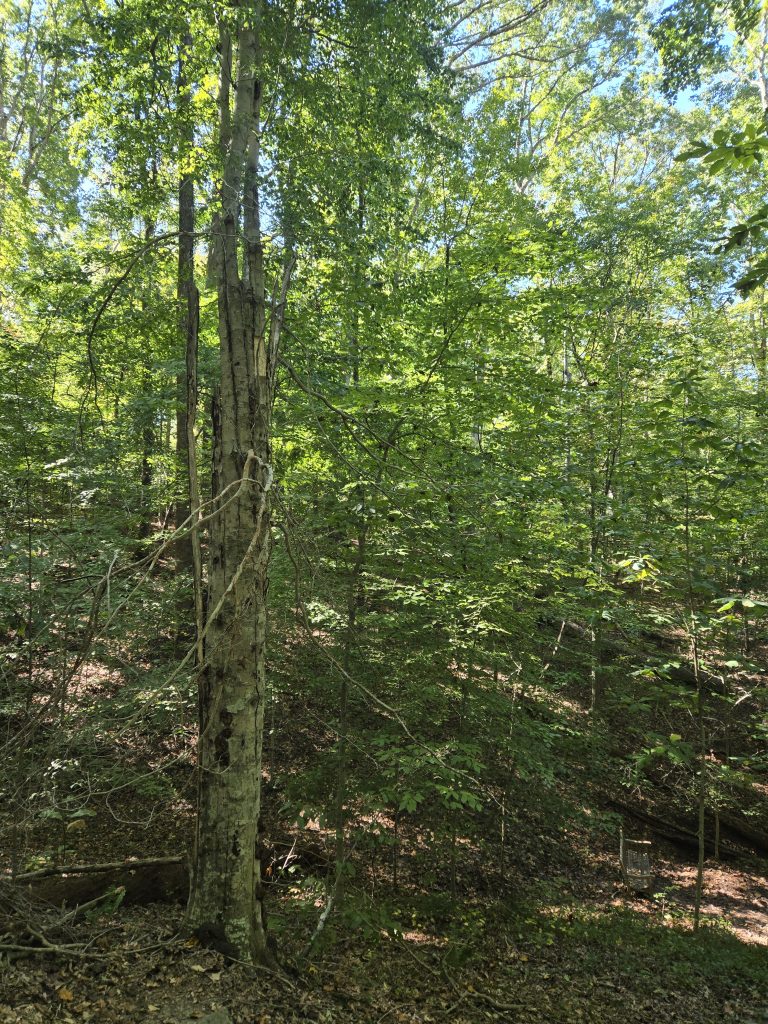
When I first started walking in the nature preserve near our home, my attention was drawn to a beech tree whose top half had toppled to the ground some time before.
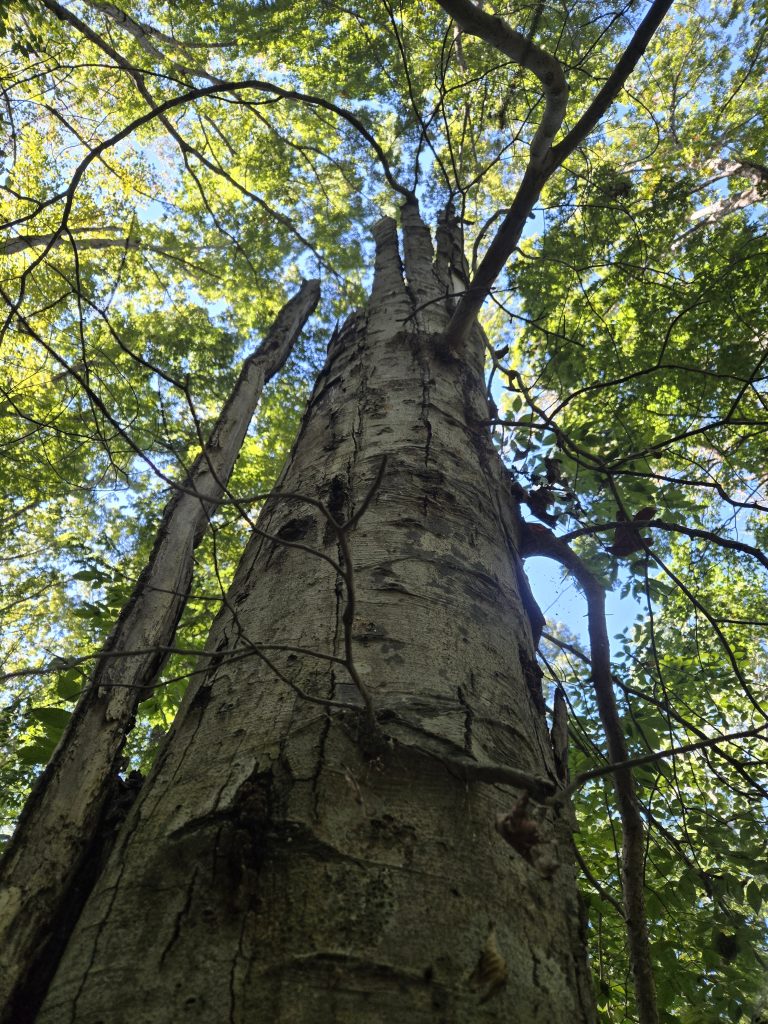
The tree looked like a giant toddler had snapped her in half, but so much life remained in her—not only in the abundant leaves she offered season after season, despite the injury, but also in the powerful sense of harmony and aliveness that rushed into me whenever I put my hand on her trunk.
She was, and continues to be, an incredibly generous tree.
I began to stop and visit every time I walked her trail. Every time, no matter how disturbed I was, she calmed me, held me, helped me feel the part of me that’s bigger than whatever’s happening around me.
Not long after I began my regular visits, Grandmother Beech toppled again. More than half of her remaining height was gone. Mushrooms grew up and down her trunk, and her bark peeled off in alarming sheets. I was sure she was dead, or would be by winter’s end.
But the next spring, old foliage dropped, buds swelled, and vibrant, green leaves unfurled as a sacred offering to earth, forest, and sky. Even after several more branches died and the only living bark was an inches-wide strip that leaned precariously away from the rest of the trunk, leaves were offered, shade was given, and the generosity continued unbroken.

Then last fall, the last strip of living bark broke and fell to the earth. I was heartbroken because I knew no matter how miraculous this tree is, she can’t survive long without leaves to gather the nourishing light.
Learning to Listen
It was around this time that I became more aware of my desire to connect with the unseen. I noticed that despite all the physical decay, Grandmother Beech’s spirit, the way she helped me when I touched her trunk, remained as strong as ever. I realized this could be a chance to learn from her in new ways.
But how do you listen to a tree, let alone a dead one?
It turns out to be easier than you might think. I’ve done plenty of rituals in my life, mostly of the obsessive-compulsive variety. This time, I put that same inclination to work, but out of love, not fear. I formed a clear intention, did some prep to get me in the zone (clearing space, kneeling, grounding in my body, etc.), offered some water to the tree, and invited her to join me. She did, and it suddenly got a whole lot easier to understand what she had to say.
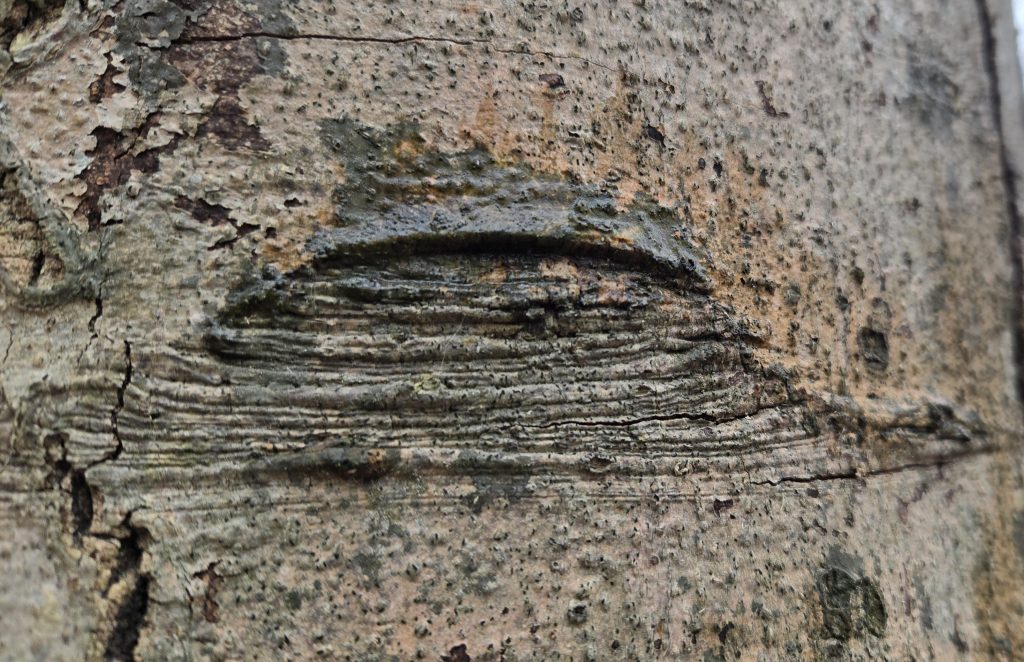
I saw some images of Grandmother Beech’s decaying body and had the sense that she wanted to make sure I knew she was dying. I felt her desire to connect more deeply and in new ways with me, but I also sensed some uncertainty, as if she was new to this and still figuring out how it all worked. I then received an image of her base and had a sudden, clear knowing that it would be helpful if I left something of mine with her—a physical item that carries a significant amount of my energy.
I told her I would, and our conversation ended soon after.
I thought for a long time about what to take to Grandmother Beech. A favorite mug? A piece of clothing? A pen? Some items I considered were more meaningful than others, but I didn’t feel good about leaving any of them, or their plastic or unknown chemicals, to break down on the ground in a forest, no matter how good my intentions were.
I eventually got the sense that I’d know what to take when the time was right, so with uncharacteristic grace, I let it go.
A Magical Encounter
The next day, I stopped as I always do on my walk through the preserve to greet and commune with Grandmother Beech.
As I rested my forehead against her trunk—something she often invites and one of my favorite ways to soak up the gift of her good energy—I felt something move close behind me. When I turned my head, I saw a tufted titmouse fly to a nearby branch.

I immediately heard instructions clear as day in my head:
Turn back to the tree.
Rest your forehead against the trunk.
Be still.
I followed the instructions (I’ve always been a little too good at that), and after a second, the titmouse hopped to a closer branch, then a closer one.
Then she hopped on top of my head.
Her feet were light and delicate, the softest breath of weight and barest hint of movement on my scalp as she poked around, looking, I assumed, for any spare hair I wasn’t using that she could take for her nest.
Twice she hopped off, then back on, hunting for building materials to keep her babies contained and warm in the gentlest, most delightful way.
I stood transfixed, feet rooted to the earth and heart flying high, ecstatic that she felt safe enough to rummage around up there for so long.
After a minute or two, she flew off, leaving me dumbstruck, unable to believe what had just happened. I’d heard of titmice doing this to dogs before, but never expected it to happen to me. It felt like Grandmother Beech had given me instructions, then called to the titmouse—
Come on over. She’s safe. Help yourself to whatever you need.
And in that moment, I realized there was another, less explicit instruction in the encounter. It was clear the possession I was meant to leave with the tree was my hair.
It was the perfect solution, really. My hair is abundant, personal, and 100% biodegradable. It carries loads of my energy, up to and including my DNA, and—perhaps the best part—it’s a gift to the tree that the tree can give back to nesting birds. I realized I could help her continue to express her incredible generosity even as her physical resources faded.
What the World Needs
I’m still in awe of what happened that day, the unexpected result of an attempt to simply sit with another being and listen.
The experience was inexplicable, connective, and heart-opening in ways I could never have predicted. And it seems to me that’s exactly what we need in the face of so much pain in the world and so many problems that logic can’t seem to untangle fast enough.
I’m not saying that all we need to do is listen to the trees (and the earth and the waters and the animals…). I am saying I believe it will be a critical part of any viable solution.
Listening to the more-than-human world is a form of repairing connection and restoring relationships, an overlooked and underestimated tool that’s far more powerful than it seems. And it really can be as simple as sitting beside, attuning to, and communing with any part of the larger web of life. Even if we don’t think we’re hearing anything, on some level, if we’re quiet enough, we can’t help but get the message.
Epilogue
I went back to Grandmother Beech the next week with scissors and left a few locks of hair tucked into the crevices in her trunk and protected hollows in her roots. I sobbed as I cut my hair, feeling the tremendous loss of a beloved tree.
It was another way in which the gift of hair is perfect, because it’s a time-honored, traditional way to mourn a raw and painful loss. But at the same time, it acknowledges the emergence in that stripping away of a deeper connection that’s even more beautiful and more extraordinary.
As it happens, that’s exactly what the unrelenting crises that are stripping away the world as we know it are inviting us to do—to discover something greater that’s always been beneath the surface and that can never be lost.
The good news is, as Grandmother Beech showed me, we don’t have to do it alone.

If you enjoyed this post, you might like my award-winning novel.
“Sublimely complex characters drive this story that promotes empathy for all earthly creatures.”
–Kirkus Reviews