
At the end of my last post, you might have thought that once I got the idea for my novel, it was all sunshine and smooth sailing from there on out. But as with any story, whether or not it has a happy ending depends entirely on where you end it.
After I finished writing my novel, I knew I wanted to publish it. I quickly found out that if you want to be published by one of the “Big Five” publishers, you have to have an agent approach them on your behalf. So the first step toward traditional publication is to pitch an agent and convince them to represent you and your book.
I learned all I could about the process of “querying” agents, wrote my pitch, and made my list. One by one, I sent off personalized notes describing the baby I’d just birthed—my heart and soul—and asked if they’d be interested in reading more.
One by one, they either politely rejected my heart and soul or didn’t bother to reply at all.
After sending over a hundred queries and getting only a couple nibbles that led nowhere, I had to admit this door was closed, and I didn’t have enough energy to keep trying to force it open.
Because no matter how many times I reminded myself that no book appeals to everyone, no matter how well I understood that the opinions of literary agents are arbitrary and subjective, and no matter how many times I recalled the positive responses from people who had actually read the book, the truth remains that rejection is hard.
Rejection. Is. Hard.
And over a hundred rejections are even harder.
Still, battered and bruised though I felt, I knew my book had something of value to contribute to the world. I just didn’t know how to get it out there.
Self-publishing offers some great options these days, and it takes a lot of work and has a steep learning curve. I didn’t have the energy to take it on. There are hybrid options as well—companies that act like traditional publishers but charge authors for their services upfront and then pay higher royalties. The problem was, most hybrid publishers are known to be scams, working with anyone with sufficient cash and offering authors overpriced services they could secure for far less on their own. The one hybrid publisher I knew of who added true value and had a great reputation in the industry was incredibly selective, with a long application process and a lengthy waitlist. Again, I didn’t have the energy to put in so many hours on a submission that had such a good chance of failing.
I was stuck.
In my experience, though, being stuck for long enough usually brings on its own solution. Immovable energy builds over time, becoming increasingly uncomfortable. Eventually, the discomfort of the stagnant energy makes whatever movement we were avoiding less unpleasant than staying still.
Another way of looking at it is that we have less control of our energy when it’s stuck, so it tends to find its own best path.
So it was with me, and I finally became willing to take action. My intuition had been telling me that whatever path I took, having support was going to be key for me in the publishing process. I recalled that the hybrid publisher that was recommended to me, SparkPress, was known for their supportive community. I finally took the time to put together an application, knowing it may not go anywhere.
They could have responded in three ways—a green light (acceptance as-is), a yellow light (potential acceptance after significant re-working), or a red light (full-on rejection). I knew they had a high rejection rate (potentially over 90%, though I never verified that number), so I steeled myself to be rebuffed.
Instead, I got the green light.
I was thrilled, and the more I learned about the publisher, the happier I got. For one thing, the founder of the press created it because she recognized that there were important stories not being told, as traditional publishers have become too focused on fame, followers, formulas, and overly narrow definitions of success.
In addition, SparkPress sent me an entire book of resources for publishing that made things simpler and easier even before I signed the contract. They have traditional distribution, meaning my book can find its way to libraries, stores, and reviewers that don’t accept self-published titles. And perhaps most importantly, they have an incredibly supportive staff and a large community of writers committed to helping each other through a challenging process.
In retrospect, it feels like the right fit at the right time.
Not that it’s perfect by any means, but working with SparkPress has not only been less overwhelming than I feared—it’s also been really fun. What’s more, I have much more creative control and community—two things that matter a lot to me—than I likely would have with traditional publishing.
Parker Palmer shares a powerful perspective on the value of rejection in his book Let Your Life Speak. He tells the story of a time when he was approaching middle age and had decided he no longer wanted to be an academic or an activist, but had no idea what he did want to be.
At one point he turned to a Quaker woman named Ruth for guidance:
“Ruth,” I said. “People keep telling me that ‘way will open.’ Well, I sit in the silence, I pray, I listen for my calling, but way is not opening…Way may open for other people, but it’s sure not opening for me.”
Ruth’s reply was a model of Quaker plain-speaking. “I’m a birthright Friend,” she said somberly, “and in sixty-plus years, way has never opened for me.” She paused, and I started sinking into despair. Was this wise woman telling me that the Quaker concept of God’s guidance was a hoax?
Then she spoke again, this time with a grin. “But a lot of way has closed behind me, and that’s had the same guiding effect.”
Palmer goes on to share how he finally got the opportunity to be considered for the position of president for a small educational institution. He pinned his hopes to that dream, only to make a complete mess of the interview. He didn’t get the job.
But he did keep exploring the question of what he was meant to do, which drew him deeper and deeper into the world of writing. Eventually, writing itself became one of the central pillars of his vocation. Palmer goes on to say:
Each time a door closes, the rest of the world opens up. All we need to do is stop pounding on the door that just closed, turn around—which puts the door behind us—and welcome the largeness of life that now lies open to our souls. The door that closed kept us from entering a room, but what now lies before us is the rest of reality.
parker Palmer
Beautifully said.
Thank goodness for slamming doors and closing ways.
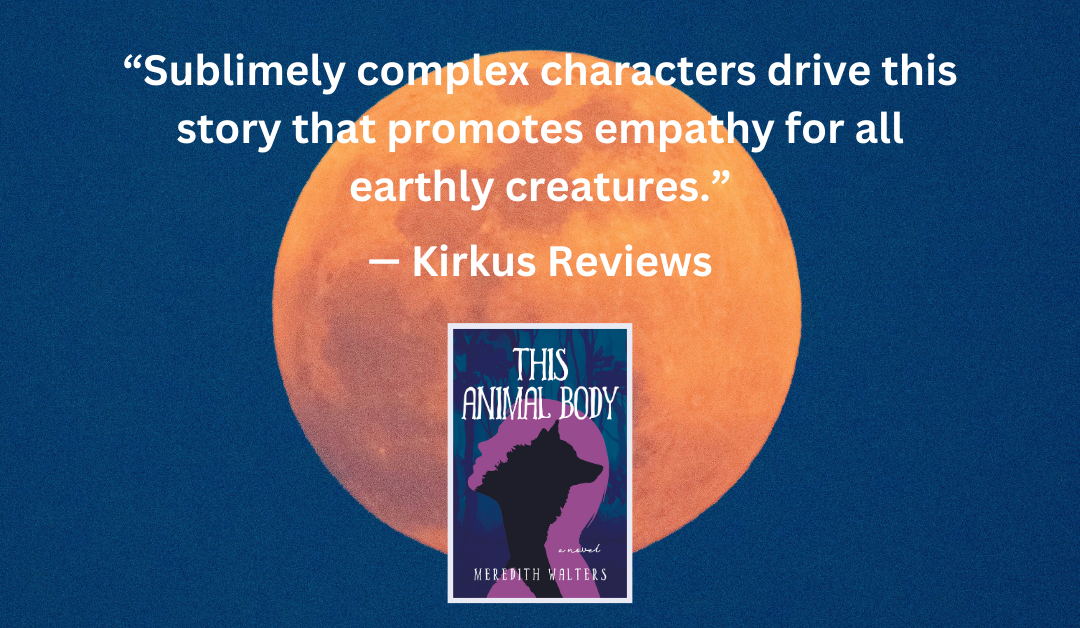
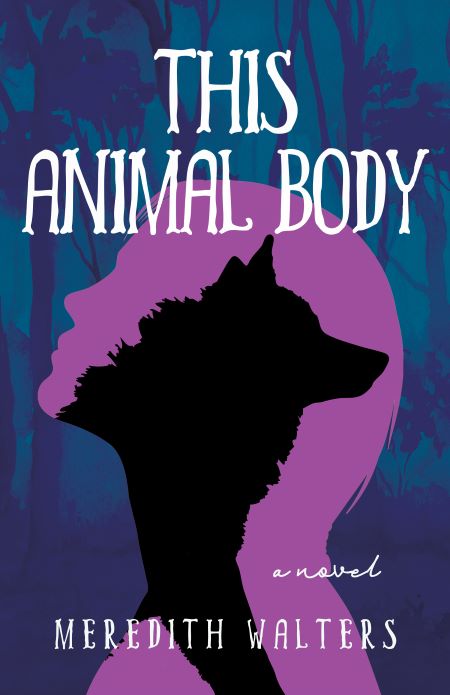
Click below to get your copy of my new novel, and don’t forget that if you pre-order before April 2, 2024 from Eagle Eye Books (my local, independent bookstore), you’ll get a signed copy, a handmade wooden bookmark, and a customizable inscription, all at no extra charge to you.
Moon photo by CHUTTERSNAP on Unsplash